You are using an out of date browser. It may not display this or other websites correctly.
You should upgrade or use an alternative browser.
You should upgrade or use an alternative browser.
Bored = Photoshop
- Thread starter Roz
- Start date
Floor
Full Access Member
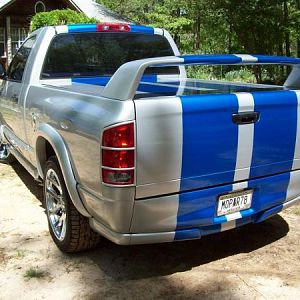
COOL MOD !! actually doing it would make the tires comes out of the fenders right?

Floor said:COOL MOD !! actually doing it would make the tires comes out of the fenders right?
Not if you got the right offset. I put 315/35/17's on the rear of my TA and they didn't stick out the same as stock. The view from behind was amazing.

While yer at it, you might photoshop BOTH of the rear tires.....
As we say in Italy, they're just abit wopsided....
Django
As we say in Italy, they're just abit wopsided....
Django
iwantmysrt said:Not if you got the right offset. I put 315/35/17's on the rear of my TA and they didn't stick out the same as stock. The view from behind was amazing.
It's just a matter of money. I'm sure you could find someone to widen your wheels, but I have no idea how much room is left in the wheelwell?:dontknow:
I did something similar when I had my GMC Syclone. Went from the stock 16x8 wheels to a set of Corvette ZR1 rims - 17x9.5 front and 17x11 rear. The rearend damn-near looked mini-tubbed!!:rock: :rock:
Silent D said:While yer at it, you might photoshop BOTH of the rear tires.....
As we say in Italy, they're just abit wopsided....
Django
DOH! I was hoping all the attention would be at the one wheel, you weren't supposed to look at the OTHER one!

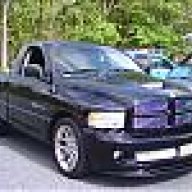
Stanimal
Full Access Member
the problem you would run into is that the tires would hit the leaf springs. if you moved the springs in you could run a wider tire. and of course you'd have to remove the plastic inner wheelwell
Hamrhead said:It's just a matter of money. I'm sure you could find someone to widen your wheels, but I have no idea how much room is left in the wheelwell?:dontknow:
I did something similar when I had my GMC Syclone. Went from the stock 16x8 wheels to a set of Corvette ZR1 rims - 17x9.5 front and 17x11 rear. The rearend damn-near looked mini-tubbed!!:rock: :rock:
Widening my wheels wouldn't the problem, its finding the tires to to wrap the wheels. But as far as room goes, I dont know either. When theres a will theres a way.
BriteCrawler
Full Access Member
Less traction in the rain too.
The weight dispursed upon a wider platform gives you less traction.
Not good for daily drivers, cool for enthusiasts.
The weight dispursed upon a wider platform gives you less traction.
Not good for daily drivers, cool for enthusiasts.
BriteCrawler said:Less traction in the rain too.
The weight dispursed upon a wider platform gives you less traction.
Not good for daily drivers, cool for enthusiasts.
(I dont drive my truck in the rain) but I beg to differ. How can more rubber on the road = less traction? When I had those 315's on my TA I could barely break em loose dry/wet. Before when I had 275's and the same tires they were toast.
VA VIPERAM
Full Access Member
- Joined
- Dec 21, 2006
- Messages
- 378
- Reaction score
- 1
These are 457's.
They won't hook on a dry road below 45 MPH.:dontknow:
Seriously though, a mini-tub with 335 or 350's would look sweet on these trucks.:rock:
They won't hook on a dry road below 45 MPH.:dontknow:
Seriously though, a mini-tub with 335 or 350's would look sweet on these trucks.:rock:
BriteCrawler
Full Access Member
iwantmysrt said:(I dont drive my truck in the rain) but I beg to differ. How can more rubber on the road = less traction? When I had those 315's on my TA I could barely break em loose dry/wet. Before when I had 275's and the same tires they were toast.
It's simple physics. When you distribute load across a wider patch of contact, there is less downward force per square inch of the contact. It can more easily be moved side to side when there's lubrication between the two surfaces (In this case water).
I sold tires / managed tire stores for 8 years. I now work for Yamaha Corporate. Wider rubber in wet conditions = less traction. I'm sure there's some good scientific info / study websites out there if you search.
You ever see an old VW Bug slide in the rain?
Naturally, engineering in GOOD tires designed to handle rain with channels to disperse water and such make this less of an issue, but as a general rule... wider contact patch in a wet surface condition means less traction.
BriteCrawler said:It's simple physics. When you distribute load across a wider patch of contact, there is less downward force per square inch of the contact. It can more easily be moved side to side when there's lubrication between the two surfaces (In this case water).
I sold tires / managed tire stores for 8 years. I now work for Yamaha Corporate. Wider rubber in wet conditions = less traction. I'm sure there's some good scientific info / study websites out there if you search.
You ever see an old VW Bug slide in the rain?
This is one of those true/not true things.
As long as the tire is not hydroplaning it's not true. The greater the tire patch in contact with the road, the more traction you will get, wet or dry. However that wider contact patch also makes it easier for the tire to hydroplane and that is where you lose traction. It's all in the design of the tread pattern that has to channel that water out from under the tire.
If what you say was true, then F1 cars in the rain would run narrow tires. They don't.
BriteCrawler
Full Access Member
Silverback said:This is one of those true/not true things.
As long as the tire is not hydroplaning it's not true. The greater the tire patch in contact with the road, the more traction you will get, wet or dry. However that wider contact patch also makes it easier for the tire to hydroplane and that is where you lose traction. It's all in the design of the tread pattern that has to channel that water out from under the tire.
If what you say was true, then F1 cars in the rain would run narrow tires. They don't.
Correct, what they run is a tire with a pattern rather than meats... which I did address "Naturally, engineering in GOOD tires designed to handle rain with channels to disperse water and such make this less of an issue" :rock: :rock: .
You speak truth, I think we mostly said the same thing, in a different way.
BriteCrawler said:Correct, what they run is a tire with a pattern rather than meats... which I did address "Naturally, engineering in GOOD tires designed to handle rain with channels to disperse water and such make this less of an issue" :rock: :rock: .
You speak truth, I think we mostly said the same thing, in a different way.
Yep.:rock:
Texas Yellow Fever
Full Access Member
That does look cool, but I like your avitar better...post more of THAT!!!!!
Texas Yellow Fever said:That does look cool, but I like your avitar better...post more of THAT!!!!!
If you show me more of your Av!! I see huge tracts of land!
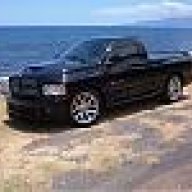
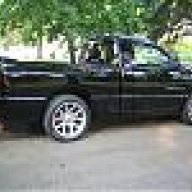
Looks good Jimi. I like how the photochop stetched the stock rim......looks really cool.
patrick
patrick
Thanks Patrick!
That would be the only way I would do it. Wheel companies will widen the rim, but they add it in the center which means the lip stays the same. I want the fat lip/ deep dish like that too.
That would be the only way I would do it. Wheel companies will widen the rim, but they add it in the center which means the lip stays the same. I want the fat lip/ deep dish like that too.


Support Us
Become A Supporting Member Today!