
Keyed Crank for a Turbo Application??

faslane505

Full Access Member
Joined
Dec 15, 2006
Messages
2,162
Reaction score
0
Location
Houston
So ive been looking for a stock short block and found one from X2. I talked to Scott Jenson and he said that this block came out of a viper that burned from the cabin back...but burned the wiring and valve cover..and apparently part of the heads and intake..hense only selling a shortblock...anyway...he told me that the crank was keyed?? what does this mean:dontknow: ..he said thats how you know it had a turbo on it..or something to that affect.

another question is ...im just gonna put keep my basic bolts on this truck...close to stock anyway....will this keyed crank affect anything....thanks

 
I've heard of keying a crank for supercharger application where a power booster is driven by the crank pulley. Stock the pulley is not keyed and can spin on the crank (not good). In a turbo setup I wouldn't think the crank would need to be keyed since it isn't driving the power maker.
 
nope. the damper from the factory is held in place by bolt torque only. any serious horsepower mods needs to have the crank "pinned or keyed" so it won't spin on the crank and/or come off.
bottom line is keyed is GOOD.
ZCx
 
ok...thanks guys...makes sense....thats what i needed...$3500 a good price you think for a good functional short block?
 
I would be concerned about how much heat that block was exposed to. Especially if the valve cover and intake were burned. Car fires can easily exceed 2000 degrees. Some even hotter with the exotic metals that are used today. Aluminum and magnesium are two more commonly used that are considered flammable metals.

I would not pay a dime for that short block until it has been metallurgically tested. At the very least checked to make sure all surfaces are trued and flat. An aluminum block exposed to extreme heat can change the properties of the aluminum.

-Muzzy
 
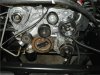
Pic of my crank during and after keying. Just prevents it from spinning if the bolt should happen to work loose which can happen if you have extra drag on the belt via a SC.
 

Attachments

  • 110307.2.jpg
    110307.2.jpg
    129.6 KB · Views: 252
  • 110307.3.jpg
    110307.3.jpg
    104.2 KB · Views: 192
Muzzy said:
I would be concerned about how much heat that block was exposed to. Especially if the valve cover and intake were burned. Car fires can easily exceed 2000 degrees. Some even hotter with the exotic metals that are used today. Aluminum and magnesium are two more commonly used that are considered flammable metals.

I would not pay a dime for that short block until it has been metallurgically tested. At the very least checked to make sure all surfaces are trued and flat. An aluminum block exposed to extreme heat can change the properties of the aluminum.

-Muzzy


thanks muzzy...will inquire about that!
 
94rt10ohio said:
Pic of my crank during and after keying. Just prevents it from spinning if the bolt should happen to work loose which can happen if you have extra drag on the belt via a SC.


thanks for the info...
 
SilvrSRT10 said:
I've heard of keying a crank for supercharger application where a power booster is driven by the crank pulley. Stock the pulley is not keyed and can spin on the crank (not good). In a turbo setup I wouldn't think the crank would need to be keyed since it isn't driving the power maker.

Exactly what SilverSRT10 said. When I had the SC installed I opted to have the crank keyed rather than pinned and went with an ATI harmonic balancer. DLM had 3 Vipers in the shop that had TMTS SC that had the pins sheared off. I decided at that point to opt for the extra insurance of having the keyed crank.
 

Latest posts

Support Us

Become A Supporting Member Today!

Click Here For Details

Back
Top