Need Shotgun Help....Question on Chokes

Rice Eater

Full Access Member
Joined
May 24, 2006
Messages
2,783
Reaction score
0
Location
Fort Lauderdale, FL
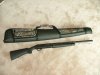
I just bought my brother a model 350 Stoger 12gauge pump action. "all black"

We are going to get into shooting trap and skeet....I used to shoot a lot in MI when I was younger but I don't remember what choke works with what application.

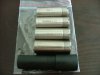
The gun came with the following chokes. This is what is printed on each one:
Skeet Cylinder
Modified
Imporved Cylinder
Full

I know the one that says skeet cylinder is most likely best for shooting trap.....but what are the others good for?

and what is the big black one....that does not have any writing on it?
 

Attachments

  • gu n 001.jpg
    gu n 001.jpg
    433.9 KB · Views: 84
  • gu n 005.jpg
    gu n 005.jpg
    472.8 KB · Views: 127
Thanks for the link Mike!

Also....what applications are the different loads/ammo for?

The gun accepts the following loads:
2 1/4
2 3/4
3 1/2

Is it amound of gun powder that makes the difference or is it the acutal shot thats different too?
 
I use Modified for most of my skeet shoting. It varies person to person. I also use 20 gauge most of the time. The 12 gauge extra pellets doesn't seem to matter. 410 is too expensive to shoot all of the time.

The best thing to do, is take out a cardboard box, and shot it at the range you normally shoot at. Look at the pattern, and is that the pattern you want? I have several guns, and they all shot slightly different patterns.

Come on up here sometime. The base has international ranges (faster skeets). We have a good range, bunch of rednecks, and tons of military guys to shoot with.

The length of the shotgun affects my score more than choke.

Oh yeah, you want 7 1/2 - 9 shot for the range.
 
Both although if you load your own there are endless possabilities, you need a reloaders guide:idea:
BTW i use cylinder ( no choke) for evey thing except goose and deer in my Browning Auto 5 and it is a Buck special with rifle sights. I can load it to pattern the same as a modified choke using the right componants and still use slugs with the same barrel. O, it is a 12 guage and uses 2 3/4 and up to 3" magnum
 
Last edited:
It helps to have a good partner too.

Remember, keep both eyes open, pull lead, and don't use the sights for skeet.
 

Attachments

  • rack1.jpg
    rack1.jpg
    39.2 KB · Views: 410
  • rack2.jpg
    rack2.jpg
    35.5 KB · Views: 196
  • rack3.jpg
    rack3.jpg
    40.5 KB · Views: 259
  • rack4.jpg
    rack4.jpg
    44 KB · Views: 823
  • rack5.jpg
    rack5.jpg
    44.4 KB · Views: 198
How right you are Mr. Bone:dancing: :rock: :D
 
Wifey said:
Both although if you load your own there are endless possabilities, you need a reloaders guide:idea:
BTW i use cylinder ( no choke) for evey thing except goose and deer in my Browning Auto 5 and it is a Buck special with rifle sights. I can load it to pattern the same as a modified choke using the right componants and still use slugs with the same barrel. O, it is a 12 guage and uses 2 3/4 and up to 3" magnum

is cylinder "no choke" the longest black on in my photo?
 
Rice Eater said:
is cylinder "no choke" the longest black on in my photo?
Sorry:( I am not familiar with that brand of shot gun, soooooooo i can't even guess:dontknow: My Browning is an older model that did not have interchangable chokes, thus the need to pattern all the more till I developed loads for each use ( it was made to shoot slugs ):D :star: :rock:
 
I would send K-80-123 a PM and ask him. He happens to be the best dude I know for any Shotgun questions.....he is a Pro :D Although I must say the answer Wifey did come up with was suprisingly clear and concise :rock: Stinkers right the end is near.......................:eek: :eek: :eek:
 
TheSickness said:
I would send K-80-123 a PM and ask him. He happens to be the best dude I know for any Shotgun questions.....he is a Pro :D Although I must say the answer Wifey did come up with was suprisingly clear and concise :rock: Stinkers right the end is near.......................:eek: :eek: :eek:
:eek: Wow a compliment, I never thought:) :dancing:
And yet another quality Post!!!!!!!!
 
i like improved for dove and quail and clay shooting but im not that great a shot modified is a close 2nd the big black choke looks like a xtra full turkey choke to me
 
Looks like a (full) choke for heavier loads and/or steel loads. eg Turkey Hunting
 
Here is the best I could come up with Rice, I havent shot too awfule much:D


Choke is an under-appreciated but critical component in your shotgunning success. Defined in the simplest terms, choke is a constriction at the muzzle end of a shotgun barrel. Its basic function is to squeeze the shot charge together as it leaves the barrel, resulting in tighter downrange patterns and, subsequently, increased effective range. The appropriate choke for any given situation should reflect the species involved and the expected shooting distance.

The three most common chokes are full, modified and improved cylinder. There are, in fact, many other choke options in fixed or variable-choke shotguns, including cylinder, skeet, improved modified and extra full, to name just a few. There was a time when shooters knew the exact implications of any and all of these chokes on their downrange patterns, but those times have disappeared. One of the primary culprits is the increasing differences in shotgun barrel diameters among the various gun makers.

Varying results: you need to pattern your shotgun to help decide which choke best suits your needs

CHOKE TIPS
It’s important to keep the threads on both the choke tube and the barrel clean when using a variable-choke shotgun. They can be easily damaged when changing chokes if they’re clogged with dirt or rust. Also, regularly check that your tube is screwed in finger tight, as it can work its way loose in the field.


To illustrate this, it’s important that we first refine our definition of choke slightly to refer to the difference between the barrel diameter and the muzzle diameter. A full choke, for example, is a constriction of .035 inches. Historically, 12-gauge shotguns all had an inside barrel diameter, or bore, of .729 inches, so a full choke reduced the diameter at the muzzle to .694 inches. Simple, right? Well, it was.

Today, inside barrel diameters are less consistent from manufacturer to manufacturer, ranging from about .722 inches to more than .745 inches. Take a .740 bore shotgun, for example. Insert a full choke and the muzzle diameter changes to .705 inches. Now imagine an improved modified choke (.025 constriction) in the traditional .729 bore. That would give you a muzzle diameter of .704 inches. And in a shotgun with a bore of .722, a modified choke (.020 constriction) would result in a muzzle diameter of .702 inches. All other variables being equal, in all three examples the downrange patterns would be nearly identical, despite the fact that three different chokes were employed.

This means shotgunners cannot automatically assume that any given choke in one shotgun will offer patterns identical to the same choke in another shotgun. As well-known shotgunning writer John Taylor once said, “It used to be that if a dime fit snugly into the muzzle of a 12-gauge shotgun, you knew you had a full choke. Today, all it tells you is that you have a shotgun and 10 cents.â€

This variability in patterning is further exacerbated when shooting steel, as the harder pellets don’t react as predictably as lead when forced through a choke. Steel does, however, tend to produce tighter patterns on average than lead. Thus, it’s often been said that the simple solution when shooting steel is to move down a choke to replicate patterns from the days of lead. In other words, steel with a modified choke will pattern similarly to lead with a full choke. While this is a reasonable rule of thumb when shooting steel shot in No. 2 or larger, the differences are not as great when shooting smaller shot sizes, and hunters should consider similar chokes to what they used with lead.

The real answer lies in patterning your shotgun using the ammunition you shoot in the field—there are simply no reliable shortcuts any more. Looking back to the days of lead, a full choke was often described as the one that would deliver 70 per cent of the pellets within a 30-inch circle at 40 yards. But today, with so many different shotshells and barrel diameters out there, hunters looking to truly understand what they can expect in downrange patterns should spend time each season shooting at paper using a variety of chokes.

With traditional choke designations having increasingly less value in today’s smoothbore world, then, successful shotgunners are the ones who do their homework before heading afield.

 
Is it safe to shoot a slug in a shotgun that has a screw-in choke?

A. The answer depends on the choke tube that's screwed into the barrel. You can get rifled choke tubes designed to spin the slug (to be used with sabot slugs), or you can just use a cylinder or improved cylinder tube (for rifled slugs). That's perfectly safe to do with a shotgun that's in good repair, with proper ammo for that gun's chamber length. I wouldn't want to shoot many slugs through a tighter choke, but some modified chokes will do okay with slugs.
The tighter you go, the more pressure there is on the barrel and action, and the more stress is placed on the muzzle, which is thinner than the rest of the barrel anyhow since it's threaded for choke tubes.

But with the right tube (rifled, cylinder, improved cylinder, or possibly modified) screwed into the gun, no problem.
 
Rice Eater said:
I just bought my brother a model 350 Stoger 12gauge pump action. "all black"

We are going to get into shooting trap and skeet....I used to shoot a lot in MI when I was younger but I don't remember what choke works with what application.

The gun came with the following chokes. This is what is printed on each one:
Skeet Cylinder
Modified
Imporved Cylinder
Full

I know the one that says skeet cylinder is most likely best for shooting trap.....but what are the others good for?

and what is the big black one....that does not have any writing on it?

Your skeet and Improved Cylinder choke is what is needed for skeet
Modified choke is for longer shots that you can get for Trap Shots....I shoot light modified for most shots....except the real long ones then use a tighter choke.

Cylinder=.000
Skeet=.005
Improved Cylinder=.010
Light Modified= .015
Modified= .020
Improved Modified= .025
Light Full= .030
Full= .035
Extra Full= .040

I shoot an over and under I shoot a .018 in the bottom and .026 in the top...they are custom chokes for shooting Sporting Clays.

Walt
 
K-80-123 said:
Your skeet and Improved Cylinder choke is what is needed for skeet
Modified choke is for longer shots that you can get for Trap Shots....I shoot light modified for most shots....except the real long ones then use a tighter choke.

Cylinder=.000
Skeet=.005
Improved Cylinder=.010
Light Modified= .015
Modified= .020
Improved Modified= .025
Light Full= .030
Full= .035
Extra Full= .040

I shoot an over and under I shoot a .018 in the bottom and .026 in the top...they are custom chokes for shooting Sporting Clays.

Walt
He has never failed me once :rock: :rock:
 

Latest posts

Support Us

Become A Supporting Member Today!

Click Here For Details

Back
Top