
Remember our Heroes

labontecsi

New Member
Supporting Member
Joined
Nov 16, 2007
Messages
1,846
Reaction score
0
Location
Sandhills of SC
Lest we forget . . .
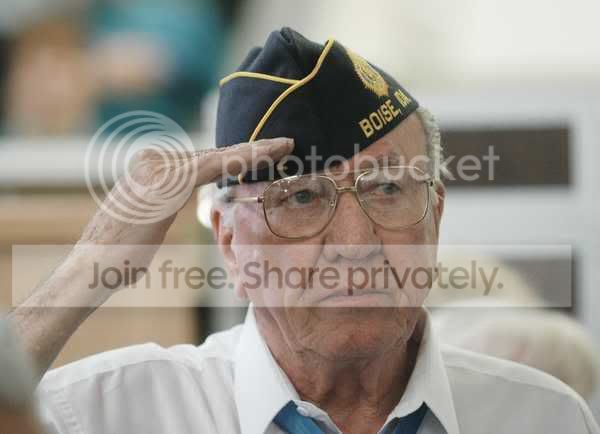
cid_000f01c91cfb2f0e11b04331b5ccnad.jpg


Ed Freeman

Once they were Soldiers.


You're an 18 or 19 year old kid. You're critically wounded, and dying in the jungle in the Ia Drang Valley, 11-14-1965. LZ Xray , Vietnam . Your Infantry Unit is outnumbered 8 - 1, and the enemy fire is so intense, from 100 or 200 yards away, that your own Infantry Commander has ordered the MediVac helicopters to stop coming in.

You're lying there, listening to the enemy machine guns, and you know you're not getting out. Your family is 1/2 way around the world, 12,000 miles away, and you'll never see them again. As the world starts to fade in and out, you know this is the day.

Then, over the machine gun noise, you faintly hear that sound of a helicopter, and you look up to see a Huey, but it doesn't seem real, because no Medi-Vac markings are on it.

Ed Freeman is coming for you. He's not Medi-Vac, so it's not his job, but he's flying his Huey down into the machine gun fire, after the Medi-Vacs were ordered not to come.

He's coming anyway.

And he drops it in, and sits there in the machine gun fire, as they load 2 or 3 of you on board.

Then he flies you up and out through the gunfire, to the Doctors and Nurses.

And, he kept coming back...... 13 more times..... and took about 30 of you and your buddies out, who would never have gotten out.

Medal of Honor Recipient Ed Freeman died last Wednesday at the age of 80, in Boise , ID ......May God rest his soul.....
 
What a great hero.......

R.I.P. Earl..... and well done, good and faithful servant....

D
 
God Speed Ed
 
I've always liked to learn more about our Hero's. And while reading I came across the following:

[FONT=arial, helvetica, sans serif]President Presents Medal of Honor to Captain Ed W. Freeman [/FONT]
Remarks by the President at Presentation of the Medal of Honor to Captain Ed W. Freeman
The East Room

listen.gif
Listen to the President's Remarks
9:35 A.M. EDT
THE PRESIDENT: Please be seated. Good morning, and welcome to the White House. Today, for the first time, I will present the Medal of Honor. It's a unique privilege to present the nation's highest military distinction to Ed Freeman, of Boise, Idaho. This moment is well-deserved and it's been long in coming.

Our White House military unit is accustomed to a lot of great events, but I can assure you they started this day with a great sense of anticipation. After all, they know how rare this kind of gathering is and what it means -- to be in the presence of one who has won the Medal of Honor is a privilege; to be in the room with a group of over 50 is a moment none of us will ever forget. We're in the presence of more than 50 of the bravest men who have ever worn the uniform. And I want to welcome you all to the White House. (Applause.)

It's an honor, as well, to welcome Barbara -- a name I kind of like -- (laughter) -- Ed's wife, along with his family members and members of his unit from Vietnam. As well, I want to welcome the Vice President, the Secretary of Defense, the Secretary of Veterans Affairs, the Chief of the Joint Chiefs, as well as members of the Joint Chiefs. I want to welcome Senator McCain. I want to welcome Senator Craig, Congressman Otter and Congressman Simpson from the delegation of Idaho. I want to welcome you all.

It was in this house in this office upstairs that Abraham Lincoln signed into law the bills establishing the Medal of Honor. By a custom that began with Theodore Roosevelt, the Medal of Honor is to be presented by the President. That duty came to Harry S. Truman more than 70 times. He often said that he'd rather wear the medal than to be the Commander in Chief. Some of you might have heard him say that. (Laughter.) Perhaps you were also here on May 2, 1963, when John F. Kennedy welcomed 240 recipients of the Medal of Honor.

By all rights, another President from Texas should have had the honor of conferring this medal. It was in the second year of Lyndon Johnson's presidency that Army Captain Ed Freeman did something that the men of the 7th Calvary have never forgotten. Years pass, even decades, but the memory of what happened on November 14, 1965 has always stayed with them.

For his actions that day, Captain Freeman was awarded the Distinguished Flying Cross. But the men who were there, including the commanding officer, Lieutenant Colonel Bruce Crandall, felt a still a higher honor was called for. Through the unremitting efforts of Lieutenant Colonel Crandall and many others, and the persuasive weight from Senator John McCain, the story now comes to its rightful conclusion.

That story began with the battalion surrounded by the enemy, in one of Vietnam's fiercest battles. The survivors remember the desperate fear of almost certain death. They remember gunfire that one witness described as the most intense he had ever seen. And they remember the sight of an unarmed helicopter coming to their aid.

The man at the controls flew through the gunfire not once, not 10 times, but at least 21 times. That single helicopter brought the water, ammunition and supplies that saved many lives on the ground. And the same pilot flew more than 70 wounded soldiers to safety.

In a moment we will hear the full citation, in all its heroic detail. General Eisenhower once observed that when you hear a Medal of Honor citation, you practically assume that the man in question didn't make it out alive. In fact, about one in six never did. And the other five, men just like you all here, probably didn't expect to.

Citations are also written in the most simple of language, needing no embellishment, or techniques of rhetoric. They record places and names and events that describe themselves. The medal itself bears only one word, and needs only one: valor.

As a boy of 13, Ed Freeman saw thousands of men on maneuvers pass by his home in Mississippi. He decided then and there that he would be a soldier. A lifetime later, the Congress has now decided that he's even more than a soldier, because he did more than his duty. He served his country and his comrades to the fullest, rising above and beyond anything the Army or the nation could have ever asked.

It's been some years now since he left the service and was last saluted. But from this day, wherever he goes, by military tradition, Ed Freeman will merit a salute from any enlisted personnel or officer of rank. Commander Seavers, I now ask you to read this citation of the newest member of the Congressional Medal of Honor Society. And it will be my honor to give him his first salute.


Again, Thank You Ed

VJ
 
Thanks for adding that Jeff. I get these stories all the time from my Grandfather. I just decided it was time to start posting them. These Men deserve to be honored and remembered.
 
Absolutely......

These Men and Women need to be recognized as much as we can. It's really fun to go and see the stories of these Soldiers and how they have changed the lives for generations.

More about Mr Freeman


MOH Recipient Ed Freeman Dies

August 21, 2008
Idaho Statesman


As Ed "Too Tall" Freeman lay ill in a Boise hospital over the past few weeks, many came to pay their respects to the 80-year-old national war hero and former helicopter pilot.

One unexpected visitor offered a very personal thank you to Freeman, a veteran of three wars and recipient of the highest military award -- the Congressional Medal of Honor -- for his actions on Nov. 14, 1965, at Landing Zone X-Ray, Ia Drang Valley, Vietnam.

"A guy came into the hospital and said, 'You don't know me, but I was one of those people you hauled out of the X-Ray,'" said Mike Freeman, 54, one of Ed's two sons. "He said, 'Thanks for my life.' "

Freeman died Wednesday.

His Medal of Honor citation credits him with helping save 30 seriously wounded soldiers in 14 separate rescue missions in an unarmed helicopter.
Since the Medal of Honor was created during the Civil War, 3,467 have been awarded, according to the Congressional Medal of Honor Society.

The heroics of Freeman and the others involved in the Ia Drang campaign are immortalized in the Mel Gibson movie "We Were Soldiers," which is based on the book "We Were Soldiers Once ... And Young." A sequel, "We Are Soldiers Still," was released this month.

Freeman, a Mississippi native who married an Idahoan, began his military career at 17 with a two-year stint in the Navy during World War II.
"He joined the Navy and hated it. The ocean thing was not his bag," Mike Freeman said.
So he joined the Army, serving four years in Germany before getting deployed to the Korean conflict.

The 6-foot-4 tell-it-like-it-is Southerner got the name "Too Tall" because he was told he was too tall to be a pilot. That didn't stop him from pushing to fly.

"He was tenacious about getting into flight school. He drove them insane until they let him in," Mike Freeman said.
He proved his mettle by becoming one the Army's most heralded helicopter pilots. Two streets at Fort Rucker, Ala., where Freeman trained to be a helicopter pilot, were recently named in honor of Freeman and Maj. Bruce P. Crandall, his commanding officer in the Ia Drang campaign.
In the early 1960s, Freeman served as aviation adviser to the Idaho Army National Guard.

"He was a super instructor. He was not one of these guys who get excited very easily," said retired Maj. Gen. Jack Kane, former commanding general of the Idaho National Guard.

Kane, a second lieutenant in 1963-64, got his first helicopter lessons from Freeman. Decades later, Kane attended the 2001 Medal of Honor ceremony for Freeman at the White House.

"It was, really, a super-moving moment," said Kane, who was in a meeting at the Pentagon when Freeman called to invite him to the ceremony.
Freeman retired from the military in 1967 and a few years later moved to Idaho with his wife, Barbara, and sons, Mike and Doug. But he didn't give up flying. He went to work for the Department of Interior's Office of Aircraft Services.

Mike Freeman said his dad made sure that helicopter pilots contracted by Department of Interior agencies were up to snuff.
"Anyone who flew for the government had to get past him," he said.
Freeman retired from flying in 1991 with more than 25,000 hours of flying time, including 18,000 in helicopters, according to his family and a 2002 newsletter published by the Idaho Military Historical Society and Museum. That's nearly three years in the air.

Freeman became a highly sought-after speaker, and he still gets hundreds of letters each year from admirers of all ages.
He rarely missed Friday lunches at Boise's Din Fung Buffet, where a group of Purple Heart veterans met each week for the past seven years.
"We're a bunch of loose cannons. We have our own opinions, but everything is in jest," said Dick Bengoechea, 84, who was a U.S. Army tank driver in Germany during World War II.

On Friday, a miniature helicopter and Medal of Honor book will be placed at the head of the group's table in memory of Freeman.
One of the traits Bengoechea admired about Freeman was his candor.
"He didn't care about rank," Bengoechea said. "If he thought he was right, he didn't care if he told a general he was wrong. He was a man's man."
Freeman, a Republican who his son says was anything but politically correct, was much more than a great patriot.

He was a devoted family man whose many passions included Volkswagens (he had many over the years, including The Thing) and fly fishing with his grandson, Scott.

In the past year and a half, Parkinson's disease ravaged Freeman's body. With the help of his sons, he was able to live at home until he became gravely ill three and a half weeks ago.

"He was a caring guy who cared about his family," Mike Freeman said. "I'll miss that a lot."
 

Latest posts

Support Us

Become A Supporting Member Today!

Click Here For Details

Back
Top