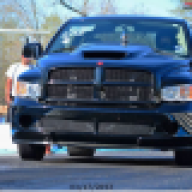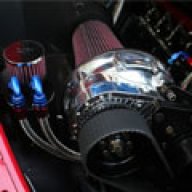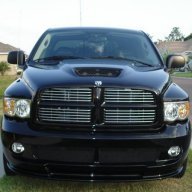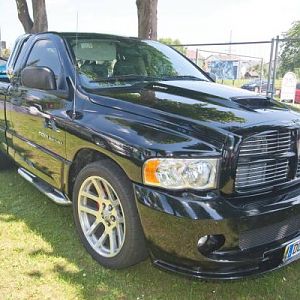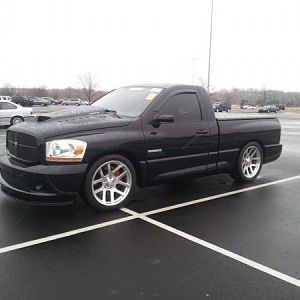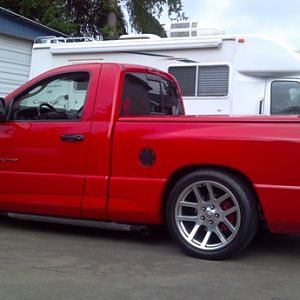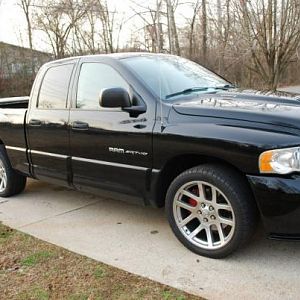

This was done way back,by one of the forums engineers Silverback, and sorry the pics are what they are, I can only download them as they are
The scoop actually is more of a vent than a inlet, , but I am sure this will start tons of discussions on the subject once again
Ram Air Test Results
--------------------------------------------------------------------------------
Okay Ladies and Gentlemen, here are the results of the Ram Air flow tests that Shawn ran for the group.
First off I want to once again thank Shawn and his friends for taking the time to do this for the group, it’s greatly appreciated.
This is the data that was supplied to me. I’m only going to re-type the pertinent data as Temperature, Humidity, etc. are not really important to the outcome.
4th Gear FPM FPM
MPH Throttle Open Throttle Closed
35 1600 1500
45 1800 1700
55 2150 2000
65 2400 2350
75 2450 2400
Okay, that’s the data. Now we will convert the test speed MPH to Feet per Minute (FPM)
35MPH = 3080FPM
45MPH = 3960FPM
55MPH = 4840FPM
65MPH = 5720FPM
75MPH = 6600FPM
You will notice at this point that at all test speeds, the Throttle Open FPM’s do not come close to the test speed FPM’s. The following data is the percentages of Throttle Open v/s Test Speeds
35MPH – 1600/3080 = 52.0%
45MPH – 1800/3960 = 45.5%
55MPH – 2150/4840 = 44.4%
65MPH – 2400/5720 = 42.0%
75MPH – 2450/6600 = 37.1%
What this is showing is that the faster you go, the less Ram Air effect you have. Also the delta air flows between Throttle Open and Throttle Closed are minimal, and with the exception of the 55MPH data, indicate that the engine is drawing more air from the grill intake portion of the system as speed increased.
Shawn attempted a number of times to post the video he sent me. Needless to say I’m terminally stupid when it comes to computers, so I cannot do this either. However after viewing the video it supports the findings above. The ribbons attached around the intake area of the hood are shown to be lifting off of the hood surface. This indicates that the air is rising off this area and going over the hood scoop, not into it.
Does it hurt or help performance?
All I can do here is give my opinion. I do not believe it does either. The data shows that the delta (change in flow) is minimal between open and closed throttle. Since the engine still performs adaquately I have to assume it is not at a loss of air so performance is not hindered.
I do have to add one comment here. It may have an effect on cooling the engine bay. Testing would have to be done to verify that, but I do remember on person noticed that his started running hotter after the scoop installation.
Is there a speed at which it robs air from the engine?
I don't know. The data showed that the percentages were dropping as the speed increased. I'm not an aerodynamic engineer, but I would be willing to bet that at some speed it would reach a point where the percent ratio would stabilize and further drops would be minimal.
Clearly our hood scoop was designed as an engine bay vent, air entering the engine does not pass through this opening. It would be this engineers estimate that the "scoop" is not in the airstream (which is some distance above the boundry layer, flowing over the hood). A restriction of this vent will increase engine compartment temps affecting intake charge temp through conduction from the intake manifold. (I would in fact expect airflow to exit this duct at certain speeds). The best practical solution would be to devise a cold air pickup sealed to the front of the grill with a nozzle.
Basically any uncovered CAI that is under the hood is actually drawing in hot air, thus increasing the iat's instead of reducing them, the oem air box or incorporating a system to draw in air from the frontal area of the grill and not the hood is the best way to actually drop iats, and increase hp, most others will actually hurt more than help hp
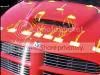


The scoop actually is more of a vent than a inlet, , but I am sure this will start tons of discussions on the subject once again
Ram Air Test Results
--------------------------------------------------------------------------------
Okay Ladies and Gentlemen, here are the results of the Ram Air flow tests that Shawn ran for the group.
First off I want to once again thank Shawn and his friends for taking the time to do this for the group, it’s greatly appreciated.
This is the data that was supplied to me. I’m only going to re-type the pertinent data as Temperature, Humidity, etc. are not really important to the outcome.
4th Gear FPM FPM
MPH Throttle Open Throttle Closed
35 1600 1500
45 1800 1700
55 2150 2000
65 2400 2350
75 2450 2400
Okay, that’s the data. Now we will convert the test speed MPH to Feet per Minute (FPM)
35MPH = 3080FPM
45MPH = 3960FPM
55MPH = 4840FPM
65MPH = 5720FPM
75MPH = 6600FPM
You will notice at this point that at all test speeds, the Throttle Open FPM’s do not come close to the test speed FPM’s. The following data is the percentages of Throttle Open v/s Test Speeds
35MPH – 1600/3080 = 52.0%
45MPH – 1800/3960 = 45.5%
55MPH – 2150/4840 = 44.4%
65MPH – 2400/5720 = 42.0%
75MPH – 2450/6600 = 37.1%
What this is showing is that the faster you go, the less Ram Air effect you have. Also the delta air flows between Throttle Open and Throttle Closed are minimal, and with the exception of the 55MPH data, indicate that the engine is drawing more air from the grill intake portion of the system as speed increased.
Shawn attempted a number of times to post the video he sent me. Needless to say I’m terminally stupid when it comes to computers, so I cannot do this either. However after viewing the video it supports the findings above. The ribbons attached around the intake area of the hood are shown to be lifting off of the hood surface. This indicates that the air is rising off this area and going over the hood scoop, not into it.
Does it hurt or help performance?
All I can do here is give my opinion. I do not believe it does either. The data shows that the delta (change in flow) is minimal between open and closed throttle. Since the engine still performs adaquately I have to assume it is not at a loss of air so performance is not hindered.
I do have to add one comment here. It may have an effect on cooling the engine bay. Testing would have to be done to verify that, but I do remember on person noticed that his started running hotter after the scoop installation.
Is there a speed at which it robs air from the engine?
I don't know. The data showed that the percentages were dropping as the speed increased. I'm not an aerodynamic engineer, but I would be willing to bet that at some speed it would reach a point where the percent ratio would stabilize and further drops would be minimal.
Clearly our hood scoop was designed as an engine bay vent, air entering the engine does not pass through this opening. It would be this engineers estimate that the "scoop" is not in the airstream (which is some distance above the boundry layer, flowing over the hood). A restriction of this vent will increase engine compartment temps affecting intake charge temp through conduction from the intake manifold. (I would in fact expect airflow to exit this duct at certain speeds). The best practical solution would be to devise a cold air pickup sealed to the front of the grill with a nozzle.
Basically any uncovered CAI that is under the hood is actually drawing in hot air, thus increasing the iat's instead of reducing them, the oem air box or incorporating a system to draw in air from the frontal area of the grill and not the hood is the best way to actually drop iats, and increase hp, most others will actually hurt more than help hp