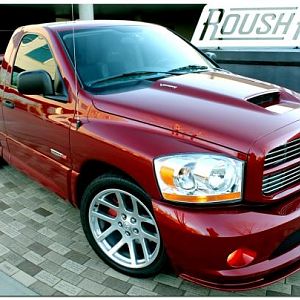
Name that car , make model and year ???

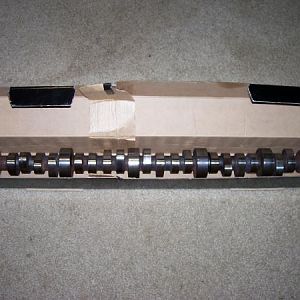
Yes, with some crank journal grinding, block relief machining to clear counterweights, rods in the 6.760 to 7.1" range, custom pistons and a good "Stroker Cam" (and.... rebalancing of course), that works!
A good sneaky stealth alternative to an actual 440! But, considerable work and cost.
Or boring the mains. Same bottom end, some people don't like to cut down the crank.
 
Many people are surprised to learn that machining the crank instead of opening the main saddle, results in a stronger overall assembly.
Well I'm not to educated in the internal workings and procedures but having been around gearheads my whole life I understand why the above makes perfect sense! I learn so much here
 
Well I'm not to educated in the internal workings and procedures but having been around gearheads my whole life I understand why the above makes perfect sense! I learn so much here
That's great to hear! We are continuing to learn stuff all the time.
More from the: "Things that make you go Hmmmmm", department...
By offset grinding the crankshaft rod journals, the stroke can be increased from the stock 440 3.75" to 4.0". Offset grinding does not remove an equal amount of material all the way around the existing journal. Instead, you are shifting the imaginary circle off to one side of the journal. The journal still ends up being perfectly round of course. As the imaginary circle is now "shifted" to one side, it increases stroke. Two ways to increase displacement: (Bore size and Stroke length). So increasing stroke from 3.75" to 4.00" with an offset grind jumps displacement from 451 to a whopping 482 cubic inch. However, this changes the Rod Ratio to 1.69. While this generally increases low end torque, there is more piston side-loading due to the steeper angle between the rod and the cylinder bore.
Our 8.3L engines have a 1.54 rod ratio which has more mechanical advantage at or near the top of the stroke and generally produce more torque because of it, but have considerably higher piston side loading, as mentioned. This topic can get quite involved as stroke and rod length combos are studied.
Anyway, Rod ratios around 1.8 are considered by many to be a good compromise. This is calculated by the rod length divided by the stroke. So... a 6.76" long connecting rod combined with a 3.75" crankshaft stroke ends up being a nice 1.8 ratio and is part of the reason many stay with a 451 cuber. Plus with some support equipment, they love to rev and are as tough as nails.
Longer connecting rods (stroke being equal) changes the dwell time a piston sees at the top of the stroke compared to the bottom of the stroke, where it now spends less time than it does at the top. This makes camshaft choice and ignition timing a study all it's own.
But back to the topic. Removing material from the CAST Main Caps and Block substantially reduces strength/integrity and in particular, is not for a higher horsepower build.
The End.
Maybe read this in sections in case your mind is glazing over and nap time is calling.
That's what happens to me...

 
Last edited:
Well I'm not to educated in the internal workings and procedures but having been around gearheads my whole life I understand why the above makes perfect sense! I learn so much here
I haven't seen one of these cranks break yet; in a 361,383,400,413,426 (Wedge or Hemi), or a 440.
 
Last edited:
That's great to hear! We are continuing to learn stuff all the time.
By offset grinding the crankshaft rod journals, the stroke can be increased from the stock 440 3.75" to 4.0". Offset grinding does not remove an equal amount of material all the way around the existing journal. Instead, you are shifting the imaginary circle off to one side of the journal. The journal still ends up being perfectly round of course. As the imaginary circle is now "shifted" to one side, it increases stroke. Two ways to increase displacement: (Bore size and Stroke length) So increasing stroke from 3.75" to 4.00" with an offset grind jumps displacement from 451 to a whopping 482 cubic inch. However, this changes the Rod Ratio to 1.69. While this generally increases low end torque, there is more piston side-loading due to the steeper angle between the rod and the cylinder bore.
Rod ratios around 1.8 are considered by many to be a good compromise. This is calculated by the rod length divided by the stroke. So... a 6.76" long connecting rod combined with a 3.75" crankshaft stroke ends up being a nice 1.8 ratio and is part of the reason many stay with a 451 cuber. Plus with some support equipment, they love to rev.
Longer connecting rods (stroke being equal) changes the dwell time a piston sees at the top of the stroke compared to the bottom of the stroke, where it now spends less time than it does at the top. This makes camshaft choice and ignition timing a study all it's own.
But back to the topic. Removing material from the CAST Main Caps and Block substantially reduces strength/integrity and is not for a higher horsepower build.
The End.
Maybe read this in sections in case your mind is glazing over and nap time is calling.
That's what happens to me...

I will read it several times as i assemble the concept in my mind then it makes sense! Sometimes I have to google stuff to get the meaning of certain terms but it gets er done. This is the kind of stuff Includemeout does and understands well :cool:

As a PS - I'm always equally impressed with your written presentations! Your grammar, punctuation, sentence structure etc is immaculate!
Not to mention the spelling hahaha
 
I will read it several times as i assemble the concept in my mind then it makes sense! Sometimes I have to google stuff to get the meaning of certain terms but it gets er done. This is the kind of stuff Includemeout does and understands well :cool:
Most of the Google stuff is great. Some of it is whacky. But so are many people I meet.
I'm sure they feel the same.
It's getting harder to find people that do a deep dive into the performance stuff. Sign of the times, I guess. Maybe INCLUDEMEOUT will post once in a while.(?)
Off Topic:
My buddy has a TESLA Model S PLAID (over 1000 horsepower), that runs mid 9 second 1/4 miles at 150 miles per hour at any altitude.
WAY different experience; and as you don't hear an engine winding out in front of you, kinda' sterile and surreal, in a way.
Toadally different experience but performance is performance.
 
Last edited:
I will read it several times as i assemble the concept in my mind then it makes sense! Sometimes I have to google stuff to get the meaning of certain terms but it gets er done. This is the kind of stuff Includemeout does and understands well :cool:

As a PS - I'm always equally impressed with your written presentations! Your grammar, punctuation, sentence structure etc is immaculate!
Not to mention the spelling hahaha
Well...thankks!! :)
Maybe that English Teacher I had was onto something when he whacked me on the back of the head with a hardcover book!!
Like a computer reboot, I guess.
 
Last edited:
Well...thankks!! :)
Maybe that English Teacher I had was onto something when he whacked me on the back of the head with a hardcover book!!
Like a computer reboot, I guess.
Ronnie 2.0!! lol
love it
 
The EV ride experience is definitely different and "sterile" iisvfitting lol - my nephew had a Mustang Mach E for a short time, went for a ride with him and it was definitely fast but no seat of the pants feeling. Felt like being in a giant RC car hahaha
 

Latest posts

Support Us

Become A Supporting Member Today!

Click Here For Details

Back
Top