Blow By.....

belgiumbarry said:
sorry PROF , but i cannot follow why natural rotation of our engines would build up pressure on drivers side .... :confused: :confused:

The crank rotates clock wise (from the drivers seat perspective). All of that rotating mass pushes lots of pressure towards the underside of the pistons on the drivers side...and that exacerbates the ring seating problem...just guessing here...remember I am an academic, and have never had grease under my finger nails (ugh!)...
 
Prof said:
The crank rotates clock wise (from the drivers seat perspective). All of that rotating mass pushes lots of pressure towards the underside of the pistons on the drivers side...and that exacerbates the ring seating problem...just guessing here...remember I am an academic, and have never had grease under my finger nails (ugh!)...
I agree with Mr Barry. I think pressure is a scalar quantity.
In any event, what are the tell tale signs of this problem. My engine is FI with 10k miles.

thanks
 
On your rebuild, make sure to get a good set of Rings (Total Seal) and do a good file fit on them. Taliban Dan did mine. I tried a couple and messed up one. Just reordered more. I am sure Dan would do your next set for you. Already familiar with the proper gap. He will be doing another set for me very soon. After that, some Diamond Pistons for my hemi.

http://www.totalseal.com/

Diamond Pistons carries them: 09024030V10F PRO-SELECT 1/16-1/16-3/16STD V10 SET (FILE TO FIT) Talk to Nick D'Agostino

I believe they were about 125 bucks for set.
 
Last edited:
nycstev said:
I agree with Mr Barry. I think pressure is a scalar quantity.
In any event, what are the tell tale signs of this problem. My engine is FI with 10k miles.

thanks

Steve the initial signs were at the Roe Breather (oil filler cap)...it just did not seem to be able to retain the oil mist...it started seeping...then I started to see a lot of steam coming from the breather cap...added a catch can from the rear vent on the drivers side valve cover...and after a while it started to puke too much oil into the catch can and lots of condensation from the catch can and the Roe Breather.

Never had an issue with the passenger side pressure...and many others have said the same thing...kind of added to my theory of the rotation direction of the crank shaft...lots of sketchy data, but no real evidence...

Roy
 
Prof said:
Steve the initial signs were at the Roe Breather (oil filler cap)...it just did not seem to be able to retain the oil mist...it started seeping...then I started to see a lot of steam coming from the breather cap...added a catch can from the rear vent on the drivers side valve cover...and after a while it started to puke too much oil into the catch can and lots of condensation from the catch can and the Roe Breather.

Never had an issue with the passenger side pressure...and many others have said the same thing...kind of added to my theory of the rotation direction of the crank shaft...lots of sketchy data, but no real evidence...

Roy

Whats your mileage?
FYI i have switched to 15-50 for quieter operation. Would this also have an effect on cylinder sealing?
 
Prof said:
Steve the initial signs were at the Roe Breather (oil filler cap)...it just did not seem to be able to retain the oil mist...it started seeping...then I started to see a lot of steam coming from the breather cap...added a catch can from the rear vent on the drivers side valve cover...and after a while it started to puke too much oil into the catch can and lots of condensation from the catch can and the Roe Breather.

Never had an issue with the passenger side pressure...and many others have said the same thing...kind of added to my theory of the rotation direction of the crank shaft...lots of sketchy data, but no real evidence...

Roy

Sean said NBT's issue was the oil being directly slung into the breather on the valve cover. He added a tube to block the direct "slinging".
 
nycstev said:
Whats your mileage?
FYI i have switched to 15-50 for quieter operation. Would this also have an effect on cylinder sealing?


I have 32k...about 22k with the Roe...
 
Bone said:
[SIZE=-1]Blow-by occurs when the explosion that occurs in your engine's combustion chamber causes fuel, air and moisture to be forced past the rings into the crankcase. Your engine's rings must maintain an excellent fit in order to contain the pressure. [/SIZE][SIZE=-1]As rings and cylinder liners wear away they are less capable of maintaining this seal. Consequently as a car ages the amount of blow-by that occurs can increase. [/SIZE][SIZE=-1]Soot and deposits left over from incomplete combustion that collect on the rings can also inhibit their seal worsening blow-by. [/SIZE][SIZE=-1]Blow-by inhibits performance because it results in a loss of compression. When the expanding gases slip past the rings they cannot as effectively push the piston down and make the vehicle go. As a result the car will have less horsepower. This also results in a loss of fuel economy. [/SIZE]

http://www.misterfixit.com/blow-by.htm


I remember seeing something like this earlier in the post...hmmm :confused:

The reason the lands of the pistons are so small and the rings are pushed close to the top of piston is for emissions control. By moving the top compression ring close to the top of the piston unburned fuel/carbon cannot get trapped on the sides of the piston during combustion. It enhances the complete burn of air/fuel mix. The negative side affect is shorter compression ring life since the top ring does not adequately cooled and is being constantly exposed to combustion temperatures. There is also less lubrication to that ring. Forced induction exacerbates the problem. Replacing the stock pistons and rings with an improved design would help but not eliminate the problem. You will get some blow-by, all engines do. You still need to install an good evacuation system. The 1/2" hose going to your intake is not good enough for a performance engine.

-Muzzy
 
Now we are getting some of the experts involved...thanks Muzzy...

Who else has some experience here???

Get your ideas in the pot...would like this to be a thread with some help for those who have this problem...
 
I can rub my finger on the passenger side vent filter and there will be about a drop of oil on the bottom of the filter. Doesnt seem to be dripping on the valve covers though....the driver's side vent is clean.
 
as far i know , my father was a mecanic, is, he used to check on spot how a engines condition was to feel at the oil filler plug for pressure upbuild and fumes....Ok, this is clear , the more wear on the rings , the more blow by ...
so i would propose :dontknow: as long the engine is runnig "good" we need just a adequate demister on the vent... as a catch can but better if the oil catchd is flowing back to the engine... :dontknow:
FI will of course help on the process , so bigger catch demister ...:dontknow:
 
There is a freeze plug on the top front of the block. Maybe a fitting there to flow the captured oil back to the engine...?

There is a lot of condensation in the catch can...that steam that many of us see...
 
Prof said:
There is a freeze plug on the top front of the block. Maybe a fitting there to flow the captured oil back to the engine...?

There is a lot of condensation in the catch can...that steam that many of us see...

yes, a good demister .. hold the oil and reflow , let escape water vapors....:dontknow:
 
Going back to basics, do a leakdown test and see how bad it is.

If the rings are worn, they won't get better.

If an engine enters detonation, pressure escapes BETWEEN the piston ring and the ring land and eventually, if unchecked, detonation will break the ring land.
Are "the other guys" having issues as well? A Paxton for example, starts to pump air at higher r.p.m. when a heavy truck like ours is already moving, not unlike a turbo, and have less of an issue with detonation with a basic tune. A twin screw has the ability to make power RIGHT OFF IDLE when basically little or no weight is moving yet. This is a recipe for the possibility of detonation due to extreme cylinder pressures like a diesel encounters (HEAVY load with HIGH cylinder pressure). Adding to this, our engines have a high bleed down lifter that produce EVEN MORE cylinder pressure (which is torque) at a low r.p.m. This really puts heavy emphasis on tuning.

Venting is a band-aid solution to a problem which is: The rings/ring lands are no longer able to seal cylinder pressure and this pressure is escaping into the crankcase instead of sealing and producing power.

Understanding it IS a sticky (political) issue, it is a mechanical device that has been modified with forced induction and something has caused your engine to lose it's seal.

Anyhow, it looks like a rebuild is required.

 
rottenronnie said:
Going back to basics, do a leakdown test and see how bad it is.

If the rings are worn, they won't get better.

If an engine enters detonation, pressure escapes BETWEEN the piston ring and the ring land and eventually, if unchecked, detonation will break the ring land.
Are "the other guys" having issues as well? A Paxton for example, starts to pump air at higher r.p.m. when a heavy truck like ours is already moving, not unlike a turbo, and have less of an issue with detonation with a basic tune. A twin screw has the ability to make power RIGHT OFF IDLE when basically little or no weight is moving yet. This is a recipe for the possibility of detonation due to extreme cylinder pressures like a diesel encounters (HEAVY load with HIGH cylinder pressure). Adding to this, our engines have a high bleed down lifter that produce EVEN MORE cylinder pressure (which is torque) at a low r.p.m. This really puts heavy emphasis on tuning.

Venting is a band-aid solution to a problem which is: The rings/ring lands are no longer able to seal cylinder pressure and this pressure is escaping into the crankcase instead of sealing and producing power.

Understanding it IS a sticky (political) issue, it is a mechanical device that has been modified with forced induction and something has caused your engine to lose it's seal.

Anyhow, it looks like a rebuild is required.


Another insightful post. We are getting more and more data.

I have done a leak down and there is a loss...

RottenRonnie has shed a little more light on the issue.
 
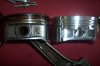
Here are the stockers vs. Diamonds. As you can see where the first ring on the stocker is much closer to the top than on the Diamond.
dcp_4836.jpg

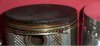
The second picture shows the stocker not having any leakage. Otherwise you would see some buildup past the rings. BTW these have about 5-6K miles on them.
ppp.JPG


I remember seeing something like this earlier in the post...hmmm
Correct, something but not all. Good post. Looks like Stevo still had questions ---
Ok what are the symptoms. What am I looking for?
So you can caulk it up to reinforcement and expansion on subject.
 
I really do not have any issues with mine. Its probably to new ( 10K ). I think I will hold off until I have some substantial mileage (and $:D ) before I dismantle this.:D
 
Bone, the amount of metal in the dome, to me is a huge factor...the more metal there, the more heat resistant it becomes. That additional 1/8 or 1/4 inch is vital...IMO.
 
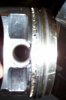
Not the best picture but here are the Diamonds after about 1500 miles, 9 psi and a bunch of NOS - - - no damage nor blow by. Most likely saved my engine too at the Nats, for those who weren't there.
100_1384.jpg
Once again, I had Taliban Dan file fit my rings. He would probably do that for anyone on the forum for a case of beer. (I had to take him out for lunch a few times too - cheap date).
 

Latest posts

Support Us

Become A Supporting Member Today!

Click Here For Details

Back
Top