
OCBob
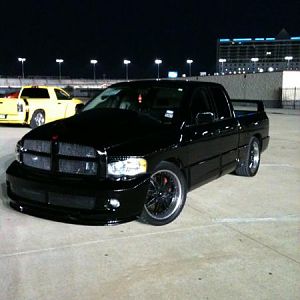
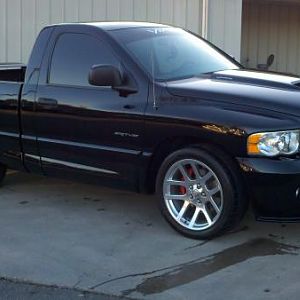
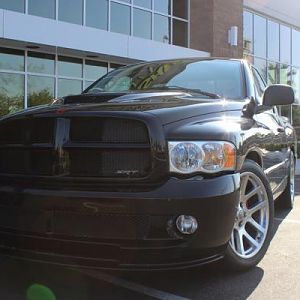
VIPER POWERED
Rushing through torrential rain, the Shelby Mustang GT 500 splashes smoothly through road pools at speed. This 500-horsepower (374kW) muscle car – the newest factory hot rod from Detroit – weathered that storm with ease and grace. But the GT 500 and other muscle cars may face tougher tests ahead.
Demand for the GT 500 has pushed the car's $US42,000 ($A56,000) base price to $US50,000 ($A67,000) or more at many domestic dealerships, some industry observers believe it could be the last 500-horsepower muscle car out of Detroit.
With petrol prices high and baby-boomer buyers nearing retirement, the sun may be setting on traditional American muscle cars.
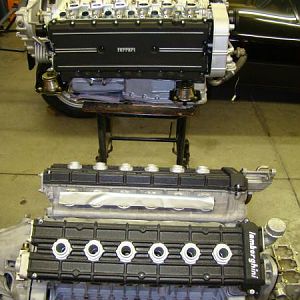
The genre was born more than 40 years ago and revived in the '90s with the Dodge Viper, the V-10 engine of which pumps out 388kW.
Moreover, as General Motors and Ford struggle financially, the money to develop these cars may be limited – particularly if the number of potential buyers is dwindling.
"I think there is a built-in demographic for these cars," says Michael Jordan, Los Angeles bureau chief for Automobile magazine.
"But it's totally correct to say this is not a big boom market. I just don't see more of the ... (muscle cars) coming from Detroit."
Though no one is predicting the imminent demise of all muscle cars, their slow fade could pose a challenge for Detroit. Although the cars appeal to over-50 buyers, they are the Big Three's main "halo" vehicles – acting as attention-grabbers for the entire brand. Without high-profile cars such as the GT 500, which should arrive at US dealerships within 60 days, and the Z06 Corvette, the Dodge Viper and Charger SRT-8, "the domestics are left with nothing in the way of halo vehicles," explains Wes Brown, a US industry consultant. "I don't know if we are at the peak or not. I guess it will be determined by how well these cars are executed."
"I don't see the Europeans backing away from selling luxury cars with these massive V8s and huge horsepower. But that's low volume. If you want to keep (sales) volumes high, there could be some resistance to bigger V8s with high horsepower, particularly if (petrol prices) stay high."
Muscle cars may evolve into smaller, lighter, more economical vehicles that hold more appeal for younger buyers, but they won't fade away altogether, predicts Jim Sanfillippo, executive vice-president of industry consultant AMCI Inc.
"Do these cars have a bright future?" Sanfillippo says. "No. But they were always a niche. What you will see in the future is smaller-displacement V8s, direct injection for power and efficiency, lighter materials. They may be different from today's muscle cars, but they will still be muscle cars."
With the arrival of the GT 500, four US vehicles have 500 horsepower, including the Corvette Z06, Dodge Viper and Ram SRT-10.
Sales of those low-volume, ultra-high-performance vehicles are likely to slow first, industry officials say.
"I don't know whether we'll see more of these (muscle) cars or not," says legendary Texas racer Carroll Shelby, who built the original GT 350 and GT 500 Mustangs for Ford in the 1960s and worked with the company on the current car.
"Five hundred is about as much horsepower as you can put on the ground and use. This horsepower race is kind of stupid."
Nonetheless, Shelby, 83, expects to work with Ford on another specialty Mustang.
"I'm happy with the GT 500," he says from his ranch in East Texas. "It's a really well-thought-out, balanced car."
Ultra-high-performance cars account for less than 100,000 sales of the overall US new-vehicle market of about 17 million annually.
But muscle cars are enormously influential. Angus MacKenzie, editor in chief of Motor Trend magazine, believes that petrol prices will affect every segment of the industry.
But MacKenzie and others in the industry expect Chevrolet to build a new Camaro and Dodge to build a new Challenger.
Chrysler Group announced recently at a NASCAR race in Daytona that the company will build the Challenger. It's expected to arrive at US dealerships within a year.
"Americans don't want small cars," says MacKenzie. "They want cars that deliver good mileage."
Last week, Ford invited The Dallas Morning News to drive a new GT 500.
In 2100km of interstate driving, the 374kW Mustang proved an excellent road car, with good steering and handling, exceptional brakes and great performance when pushed.
The car's petrol consumption varied from 11.8L/100km to 10.2L/100km.
Some 65 per cent of US buyers for the car would be baby boomers, says Hau Thai-Tang, director of advanced product creation and special vehicle team engineering.
"The Shelby 500 is the automotive equivalent of Viagra," he says. "The car resonates with baby boomers. Like the others, he expects muscle-car Mustangs to evolve.
"I don't see horsepower going up in the same way it has. Customers tell us they want horsepower and economy."
Demand for the GT 500 has pushed the car's $US42,000 ($A56,000) base price to $US50,000 ($A67,000) or more at many domestic dealerships, some industry observers believe it could be the last 500-horsepower muscle car out of Detroit.
With petrol prices high and baby-boomer buyers nearing retirement, the sun may be setting on traditional American muscle cars.
The genre was born more than 40 years ago and revived in the '90s with the Dodge Viper, the V-10 engine of which pumps out 388kW.
Moreover, as General Motors and Ford struggle financially, the money to develop these cars may be limited – particularly if the number of potential buyers is dwindling.
"I think there is a built-in demographic for these cars," says Michael Jordan, Los Angeles bureau chief for Automobile magazine.
"But it's totally correct to say this is not a big boom market. I just don't see more of the ... (muscle cars) coming from Detroit."
Though no one is predicting the imminent demise of all muscle cars, their slow fade could pose a challenge for Detroit. Although the cars appeal to over-50 buyers, they are the Big Three's main "halo" vehicles – acting as attention-grabbers for the entire brand. Without high-profile cars such as the GT 500, which should arrive at US dealerships within 60 days, and the Z06 Corvette, the Dodge Viper and Charger SRT-8, "the domestics are left with nothing in the way of halo vehicles," explains Wes Brown, a US industry consultant. "I don't know if we are at the peak or not. I guess it will be determined by how well these cars are executed."
"I don't see the Europeans backing away from selling luxury cars with these massive V8s and huge horsepower. But that's low volume. If you want to keep (sales) volumes high, there could be some resistance to bigger V8s with high horsepower, particularly if (petrol prices) stay high."
Muscle cars may evolve into smaller, lighter, more economical vehicles that hold more appeal for younger buyers, but they won't fade away altogether, predicts Jim Sanfillippo, executive vice-president of industry consultant AMCI Inc.
"Do these cars have a bright future?" Sanfillippo says. "No. But they were always a niche. What you will see in the future is smaller-displacement V8s, direct injection for power and efficiency, lighter materials. They may be different from today's muscle cars, but they will still be muscle cars."
With the arrival of the GT 500, four US vehicles have 500 horsepower, including the Corvette Z06, Dodge Viper and Ram SRT-10.
Sales of those low-volume, ultra-high-performance vehicles are likely to slow first, industry officials say.
"I don't know whether we'll see more of these (muscle) cars or not," says legendary Texas racer Carroll Shelby, who built the original GT 350 and GT 500 Mustangs for Ford in the 1960s and worked with the company on the current car.
"Five hundred is about as much horsepower as you can put on the ground and use. This horsepower race is kind of stupid."
Nonetheless, Shelby, 83, expects to work with Ford on another specialty Mustang.
"I'm happy with the GT 500," he says from his ranch in East Texas. "It's a really well-thought-out, balanced car."
Ultra-high-performance cars account for less than 100,000 sales of the overall US new-vehicle market of about 17 million annually.
But muscle cars are enormously influential. Angus MacKenzie, editor in chief of Motor Trend magazine, believes that petrol prices will affect every segment of the industry.
But MacKenzie and others in the industry expect Chevrolet to build a new Camaro and Dodge to build a new Challenger.
Chrysler Group announced recently at a NASCAR race in Daytona that the company will build the Challenger. It's expected to arrive at US dealerships within a year.
"Americans don't want small cars," says MacKenzie. "They want cars that deliver good mileage."
Last week, Ford invited The Dallas Morning News to drive a new GT 500.
In 2100km of interstate driving, the 374kW Mustang proved an excellent road car, with good steering and handling, exceptional brakes and great performance when pushed.
The car's petrol consumption varied from 11.8L/100km to 10.2L/100km.
Some 65 per cent of US buyers for the car would be baby boomers, says Hau Thai-Tang, director of advanced product creation and special vehicle team engineering.
"The Shelby 500 is the automotive equivalent of Viagra," he says. "The car resonates with baby boomers. Like the others, he expects muscle-car Mustangs to evolve.
"I don't see horsepower going up in the same way it has. Customers tell us they want horsepower and economy."