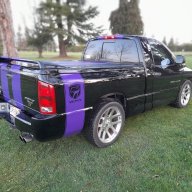
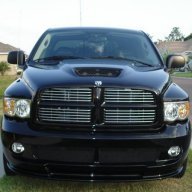
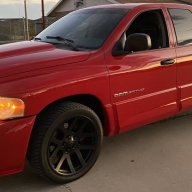
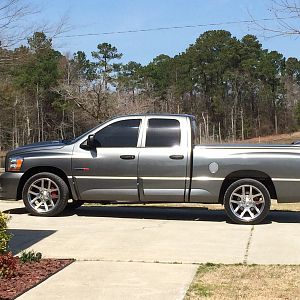
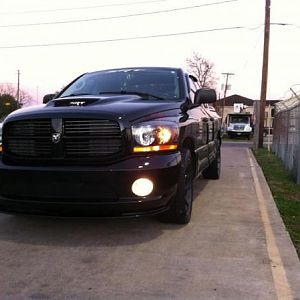
KIWI'S NA BUILD

Looking at your video you can see the rockers .. it appears you donr have the baffles installed ?!?

That may have also been causing your catch can filling to fast !
The baffles are there and were cleaned and reinstalled. There is abot 10x the amount of oil splashing around up there. Used to be only a small amount only enough to lubricate, now swimming in it.
 
The baffles are there and were cleaned and reinstalled. There is abot 10x the amount of oil splashing around up there. Used to be only a small amount only enough to lubricate, now swimming in it.
Damn ,, whats your oil pressure read ? Maybe test it using another gauge than the factory one ..
 
Looking in the oil fill hole you can see the rockers which I dont think your suppose to see ...
 
Last edited:
Just took a pic of mine .. you cant see the rocker just a shield in the fill hole !
IMG_1461.jpeg
 
Definitely can't see yours! Maybe that's the issue
 
Hopefully Kiwi shares the wisdom
 
I don't know about wisdom, but...
I suggested to switch to synthetic oil and to get the break-in oil out a.s.a.p.
I seem to remember he has a catch-can(?) and as the Viper engine doesn't use a P.C.V. Valve, they can be a bit touchy.
Basically, the main vacuum line on the catch-can can pull too hard and requires a line restriction.
Otherwise, too much vaccum will cause it to smoke a bit (normally from the side that has the main vacuum line for the catch can). The dramatic oil-fog wave inside the valve cover from a heavy vacuum pull can/will overwhelm the valve seals in its path.

I used a solid brass plug on mine then drilled a hole in the plug to reduce the pull and pushed that into the rubber hose.

It's best to fix the issue sooner than later because oil vapor and catalytic convertors don't play well together.

It also contaminates the oil in the pan and the catch can fills up as quickly as the oil pan level drops.

The line restriction worked.
 
Last edited:
Catch can as per photo. Restrictor in vac line has 3/16" hole. Clean air line original equipment.
There was no heavy breathing on dyno.
Had hose off catch can just resting by master cylinder pointing towards camera, so I could monitor.
Final run put breather hose back on, no change in fuel delivery or power made. So made no difference.
Pulled air intake to change the power steer pump and put correct pulley on the new pump.
No oil from clean air line in intake and as you can see no oil seeping back through TB, absolutely dry. The old engine did that.
So there is no oil from breather entering engine to cause smoke.
I ran running in oil for first 600 miles. I have stayed with a high quality mineral oil 15/40 as the lifters still leak down, but improving by the week. I will change to synthetic oil at next change.

a6c0e8db-bd79-48d8-8c62-01f0bbcdd646.jpg1f8526c1-9982-45b1-aee6-9f81295b83db.jpg
 
Too many models of catch cans! My main vacuum draw (restricted) was from the passenger side (your driver side). The line at the back of the driver side (your passenger side) has very little pull on it and the idea is to create a draft at that location (almost no pull from there).
Question: During operation, how often do you have to drain the can? Every 500 miles? Every thousand? And..how much is coming out?

Sounds like your investigation is on the right track.
 
Too many models of catch cans! My main vacuum draw (restricted) was from the passenger side (your driver side). The line at the back of the driver side (your passenger side) has very little pull on it and the idea is to create a draft at that location (almost no pull from there).
Question: During operation, how often do you have to drain the can? Every 500 miles? Every thousand? And..how much is coming out?

Sounds like your investigation is on the right track.
I did some research. Seems the valve cover on your driverside is supposed to have a restrictor in it.
The whole time I have owned my truck it was plumbed as the clean air side. That is why when I start my truck it would rev to about 1500rpm and then slowly reduce to normal idle as the idle air valve cycled through to shut down. The whole engine internally was acting as a vacuum tank sucking lots of air upsetting the start up tune.
I put the catch can on the old engine after reading about oil sitting in intake manifold causing problems when suddenly 'lets go racing'. I had a small amount of seepage from TB and thought I would put a stop to that. Which it did. Only captured about 100ml in 2000 miles.
Fast forward to new engine. Flooded catch can in 500 miles, big clouds of smoke out the exhaust. Thats when I started reading up. Found my breather dirty side was on the wrong rocker cover so I changed that no big deal. Then I started to watch it. It was getting about 200ml in 300 miles.
That is when I put the restrictor in. Seems to be working. On start up engine only goes to 1000rpm and then drops back to idle straight away. Much better.
Having seen that there is no oil in TB or clean air inlet in intake pipe, I am now happy that the breather is working as it should. The very light haze, that you need the light right to see it, could also be because of the mineral oil. I am leaving that in for now as the lifters have not completely sealed yet. They are a lot better and improving all the time but don't hold up overnight. I think I will change to synthetic oil at next oil change.
My weird logic reckons that if I go to a 5w30 oil it will lower the oil pressure as it would leak more out of the bearings, cam chain hole etc etc therefore less would be spurting out the pushrods into the rocker cover.
However, thinner oil flows better, maybe even more would get to the top.
That just does my head in.
For now it can smoke a little at idle and I shall just put up with it.
Wakey wakey.

 

Appears these are the baffles needed
SOrry, off topic here but The Youtuber in this clip actually just recently yanked out his viper motor and is currently transplanting a V6 tt Hurricane lump into it. God only knows why ?????
 
SOrry, off topic here but The Youtuber in this clip actually just recently yanked out his viper motor and is currently transplanting a V6 tt Hurricane lump into it. God only knows why ?????

Better fuel economy (?)

Done properly, the TT V6 high horsepower version is 125 horspower more than the stock Gen II Viper, but why not build the Gen II ??

Things that make you go: Hmmmmmmm.
 
Last edited:
Kiwi SRT10:
The next time you are at the dyno facility, you can dazzle them with your knowledge of dynos by telling them their RPM and TORQUE traces need to cross at 5250 r.p.m.

Horsepower= Torque x R.P.M./5250
Torque= Horsepower x 5250/R.P.M.

So...No matter how you slice it, the dyno software calculates at 5250 where Torque and Horsepower meet.

If they ask...

According to research done by Mr. Watt, if you divide 6.2832 foot pounds of work per revolution of the weight used during the Horse Trials into 33,000 foot pounds, you come up with the fact that one foot pound of torque at 5252 R.P.M. is equal to 33,000 ft. lbs. per minute of work which is ONE HORSEPOWER! 33,000 ÷ 6.2832= 5252.1 (close enough)

NONE of the (3) dynos I've used locally were setup like this and the Operators gave me blank stares when I questioned them.

Unfortunately, it didn't make a bit of difference to the actual torque/horsepower numbers by making the changes to the traces after a few pulls, But...it LOOKS better and seems more professional and on board with the standard. Well...maybe. Or maybe they will ask you to leave. Hard to say.

Northern ramblings...
 
Last edited:
Kiwi SRT10:
The next time you are at the dyno facility, you can dazzle them with your knowledge of dynos by telling them their RPM and TORQUE traces need to cross at 5250 r.p.m.

Horsepower= Torque x R.P.M./5250
Torque= Horsepower x 5250/R.P.M.

So...No matter how you slice it, the dyno software calculates at 5250 where Torque and Horsepower meet.

If they ask...

According to research done by Mr. Watt, if you divide 6.2832 foot pounds of work per revolution of the weight used during the Horse Trials into 33,000 foot pounds, you come up with the fact that one foot pound of torque at 5252 R.P.M. is equal to 33,000 ft. lbs. per minute of work which is ONE HORSEPOWER! 33,000 ÷ 6.2832= 5252.1 (close enough)

NONE of the (3) dynos I've used locally were setup like this and the Operators gave me blank stares when I questioned them.

Unfortunately, it didn't make a bit of difference to the actual torque/horsepower numbers by making the changes to the traces after a few pulls, But...it LOOKS better and seems more professional and on board with the standard. Well...maybe. Or maybe they will ask you to leave. Hard to say.

Northern ramblings...
I like it when you think out loud. There is so much science in that head.
Me, I'm like, I wonder if Striker Heads have a sticker or a logo.....? Hahaha
 
I like it when you think out loud. There is so much science in that head.
Me, I'm like, I wonder if Striker Heads have a sticker or a logo.....? Hahaha
Come to think of it, the logo on my valve cover spacers is the only Striker logo I've seen.
 

Attachments

  • Screenshot_20250803_121321_Google.jpg
    Screenshot_20250803_121321_Google.jpg
    84.6 KB · Views: 6

Latest posts

Support Us

Become A Supporting Member Today!

Click Here For Details

Back
Top