Looking for info on performance mods

You should be fine with everything listed there other than spray. The ring landings on the stock pistons don't hold up well under boost or spray. With heads/cam and all the bolt-ons, you MIGHT make 600rwhp. If you want more, then you should build it.

Are the ported stock heads really worth the gain? I was thinking Strykers or not wasting the time... but now Strykers cannot be had. :(
 
At what point with these mods will the engine need to/should be forged?

By "forging", most people mean pistons and rods.

600 wheel would cover the majority of the guys that have done the street-blower packages or ported head/cam combos and/or those with moderate hits of nitrous. There are power exceptions of course on the big t.t. builds and such, but lets look at the 600 wheel level for now.

With 600 wheel, you are at least 200 crank-horsepower higher than the original engine design, so you are taking some chances already. A few power shifts with sticky tires on a well-prepped track and parts ARE stressed. Add to that the sheer weight of these trucks and the engine is definitely going into battle.

It's not like the o.e.m. rods are going to bend in half at these power levels. If someone says (for example)- "These aftermarket rods are good for 1100 horsepower".. what the hell does that mean? I'd be more concerned about that particular rod's ability to yank a piston back from t.d.c. at 6600 r.p.m. without pulling apart !

The o.e.m. rods are the same as a 6.1L cracked powder rod; Not bad but not great. The forged aftermarket ones that are available should be stronger than the o.e.m.

You can buy the o.e.m. Rod AND Piston, piston pin and rings for $48.00 per unit, assembled. That should tell you something. ;)

The o.e.m. pistons (as mentioned above) will crack even under limited detonation (Gen III AND the Gen IVs). And because detonation can be caused by so many things, it is extremely important to choose a tuner that understands the equipment you have on the engine and how it is going to be used. Furthermore, get to a dyno once you have your parts installed and make sure the engine has a safe A/F ratio and isn't pinging (precursor to detonation) AT ALL under load. That all by itself will go a LONG way to keeping the engine alive and happy. More so than how much "power" it is making with it's current parts.

Forged pistons won't withstand detonation either, it's just that they take a little longer to die and don't often fail in such a spectacular fashion like the o.e.m. pistons. I've seen the piston o.e.m. crowns come right off and what's left of the piston cocks in the bore, and the piston/rod come right out the side of the block. Messy and expensive. So: GET THE TUNE RIGHT !

If you want to keep your truck and you are right around 600 wheel (like me), you should consider pulling your engine and spending some money on some decent rods and pistons.

And yes WA 2 FAST, ported heads are worth doing IF they are done properly. Heads are where power is MADE afterall. Talk to Greg Good for advice on head mods to suit your needs. I don't know at this point if Strikers will ever be available again so G.G. or a Gen IV conversion may be your only options. Keep in mind any of these head options CAN also be used in a forced induction application.

And, I don't find n.a. more expensive than going the F.I. route. I like to keep things really simple and I am a HUGE fan of the naturally aspirated route on these engines. Build for torque and you'll be very surprised what you can pound on at the track. :)

Hope this helps.
Ronnie
 
Last edited:
Ron...as always you are a fabulous source of info.

I am at ~450rwhp now...would be thrilled with 550rwhp/550rwtq, keeping the revs below 6400rpm.

I would hope I could do that with a mild cam, ported heads, and a safe tune that would keep the motor alive a long time.

Is Greg Good on this site?
 
Ron...as always you are a fabulous source of info.

I am at ~450rwhp now...would be thrilled with 550rwhp/550rwtq, keeping the revs below 6400rpm.

I would hope I could do that with a mild cam, ported heads, and a safe tune that would keep the motor alive a long time.

Is Greg Good on this site?

I don't believe so. But if you look around you will find him or if need be, I can pm you a link.
 
By "forging", most people mean pistons and rods.

600 wheel would cover the majority of the guys that have done the street-blower packages or ported head/cam combos and/or those with moderate hits of nitrous. There are power exceptions of course on the big t.t. builds and such, but lets look at the 600 wheel level for now.

With 600 wheel, you are at least 200 crank-horsepower higher than the original engine design, so you are taking some chances already. A few power shifts with sticky tires on a well-prepped track and parts ARE stressed. Add to that the sheer weight of these trucks and the engine is definitely going into battle.

It's not like the o.e.m. rods are going to bend in half at these power levels. If someone says (for example)- "These aftermarket rods are good for 1100 horsepower".. what the hell does that mean? I'd be more concerned about that particular rod's ability to yank a piston back from t.d.c. at 6600 r.p.m. without pulling apart !

The o.e.m. rods are the same as a 6.1L cracked powder rod; Not bad but not great. The forged aftermarket ones that are available should be stronger than the o.e.m.

You can buy the o.e.m. Rod AND Piston, piston pin and rings for $48.00 per unit, assembled. That should tell you something. ;)

The o.e.m. pistons (as mentioned above) will crack even under limited detonation (Gen III AND the Gen IVs). And because detonation can be caused by so many things, it is extremely important to choose a tuner that understands the equipment you have on the engine and how it is going to be used. Furthermore, get to a dyno once you have your parts installed and make sure the engine has a safe A/F ratio and isn't pinging (precursor to detonation) AT ALL under load. That all by itself will go a LONG way to keeping the engine alive and happy. More so than how much "power" it is making with it's current parts.

Forged pistons won't withstand detonation either, it's just that they take a little longer to die and don't often fail in such a spectacular fashion like the o.e.m. pistons. I've seen the piston o.e.m. crowns come right off and what's left of the piston cocks in the bore, and the piston/rod come right out the side of the block. Messy and expensive. So: GET THE TUNE RIGHT !

If you want to keep your truck and you are right around 600 wheel (like me), you should consider pulling your engine and spending some money on some decent rods and pistons.

And yes WA 2 FAST, ported heads are worth doing IF they are done properly. Heads are where power is MADE afterall. Talk to Greg Good for advice on head mods to suit your needs. I don't know at this point if Strikers will ever be available again so G.G. or a Gen IV conversion may be your only options. Keep in mind any of these head options CAN also be used in a forced induction application.

And, I don't find n.a. more expensive than going the F.I. route. I like to keep things really simple and I am a HUGE fan of the naturally aspirated route on these engines. Build for torque and you'll be very surprised what you can pound on at the track. :)

Hope this helps.
Ronnie

Ronnie, This is great info, I want to push the envelope but really don't want or need to have a major rebuild for a few extra HP,
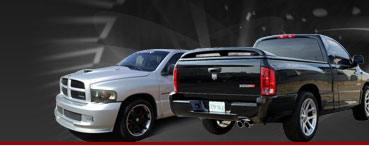
I'm pretty happy with the mods on my grey truck, I like a stock look and I like to do things as $$ allow,
So the next mod seems like a throttle body, I don't want a vendors logo on it so perhaps a ported oem is the next best mod?
P.S. Not many dyno's or Viper experts here on the wet coast.
 
Ronnie, This is great info, I want to push the envelope but really don't want or need to have a major rebuild for a few extra HP,
I'm pretty happy with the mods on my grey truck, I like a stock look and I like to do things as $$ allow,
So the next mod seems like a throttle body, I don't want a vendors logo on it so perhaps a ported oem is the next best mod?
P.S. Not many dyno's or Viper experts here on the wet coast.


You are only about a 10 hour drive to Calgary, drive it over and let Ron and Toma tune it for you.
 
Guy, I totally agree with Ronnie...of course I am just expressing an opinion, he is speaking from hands on experience. He may be one of only five or six people that have really taken the time to understand the Viper engine and have had the experience in building the engines to live.

IMO there are a few additions for more safety if you are building the bottom end:

1. Use Gen IV main bearings with additional oiling ports
2. Nitride coat and balance everything
3. Build the engine on a table, do not use an engine stand (the length induces a little torque in the aluminum block if it is on an engine stand during build)
4. With forced induction and forged components numbers above 700 rear wheel (torque and or horsepower) become scary...and as Ronnie says the pistons and ring lands seem to be the weak point in our engines.

All of the above are academic observations...I would defer to the experts, but the above are suggestions for your consideration if you go into the bottom end. And I recommend that you do so!
 
Hey Shorty, don't be disrespectable to Roy. He may be old but he is mean as hell. BTW how are you health wise??

Respect... Roy?? I'll just keep my mouth shut:eek: I'm hanging in there... Just trying to get everything in order for when I get out. Thanks for asking:)
 

Latest posts

Support Us

Become A Supporting Member Today!

Click Here For Details

Back
Top