

oiling issues thread

Stinker said:
correct, but i keep hearing , 'what are you doing about the oiling issue?"

i keep asking "what issue?"

and havent gotten a good response yet.

i have rod bearings that look like oiling issues, but are a result of bad clearances during instalation.

in the bearings we are gonna use, the mains are grooved to "improve" oiling

and they are also coated to improve "life"

but I still dont see any issues yet with oiling, and I am sure there are some out there, i jsut havent been shown them yet:dontknow:

I haven't seen evidence of any oiling issues (yet?) but i don't do a large number of these engines either. No galling, discoloring, etc; normally associated with an oiling issue..

What I do see is detonation damage: "Spider-cracks" on the piston tops and in some cases, an outright cracking off of a portion of the top of the piston (which broke at the land in this case); which is back to fairly typical detonation damage.

The current victim broke a chunk out, jammed the piston in the bore and kicked a rod. Does this make the rods "bad"? not in my mind. Does it make the pistons defective? Nope.
 
Last edited:

FATJACK said:
If the oil is going to the back of the pan why is it #3 that usually turns the bearing? Is #3 the first bearing to get oil and the first one to be affected by oil starvation or is it the last one to get oil being the cause of oil starvation and is the oiling problem starvation at all?

It looks to me like the #3 bearing gets literally hammered by detonation (it seems #3 is the vulnerable cylinder in these engines, one that every engine seems to have), fails and spins....
I agree, with Ferraritruck, if #3 is the leanest, it will tend to ping and detonate first . I stuck my richest injector in that hole as a safety precaution.

The bearings I have seen don't look wiped or "smeared" or "blued" from heat and/or from a lack of oil, for example, they actually look like they have been POUNDED. Well, because they have...

If FSTJACK says there is a cavitation issue then there very likely is. It just hasn't affected any engines I have repaired at this point in time.

Ron
 
Last edited:
Silverback said:
Some one might want to do a search on the NFFF site for an answer that Hennessey gave me.

Hennessey who? ;)
What is the NFFF site, for those largely uniformed (like me)?
Was that about coating the bearings or something???...???
 
Last edited:
Silverback said:
Some one might want to do a search on the NFFF site for an answer that Hennessey gave me.
''here is what happens: #3 rod journal gets oil starved, it gets hot and breaks the rod nearest the journal (furthest from the piston). after that all hell can break loose: hole in block, broken cam, piston dug into liner, liner scarred or pushed out of block and the list goes on. all the additional breakage is a result of the oil starved rod journal and the rod breaking due to that - in my humble opinion.''
__________________
John Hennessey


this is what i found, but still see no evidence of this happening:dontknow:


from the rods that i have seen most of the time if there is oil starvation the rod blackens, then there is failure, the rods i have examined do not show oil starvation.

hence the conclusion the pistons are comming apart causing damage to the bore hence rod has no where to go:dontknow:
 
Stinker said:
''here is what happens: #3 rod journal gets oil starved, it gets hot and breaks the rod nearest the journal (furthest from the piston). after that all hell can break loose: hole in block, broken cam, piston dug into liner, liner scarred or pushed out of block and the list goes on. all the additional breakage is a result of the oil starved rod journal and the rod breaking due to that - in my humble opinion.''
__________________
John Hennessey


this is what i found, but still see no evidence of this happening:dontknow:


from the rods that i have seen most of the time if there is oil starvation the rod blackens, then there is failure, the rods i have examined do not show oil starvation.

hence the conclusion the pistons are comming apart causing damage to the bore hence rod has no where to go:dontknow:


ha ha fkn hennessey, I've bet he has never even opened up a block and even held a piston himself:p :D :D


I agree with stinker again, I've had a few m3 motors that have had oil pumps fail and even many more that failed when they had batch of bad rod bearings got out. what stink said is exactly what happenes when a rod bearing gets oil starved
 
Ferrari,stinker ronnie, and fstjack are right it is not some oiling as pistons. Plus maybe if the truth was told all the way on some of these blocks, they may have had a little bit of help. All the pictures I have seen you guys are right not oil starvation but mechanical faliure of a cheaply built part. I do alot of seized up diesel engines and blueing from beaing scorched is a big sign of oil not being present but clean and smashed with nicks is more of a part faliure ie, pistons and for those with just forged pistons 700hp on stock rods is a high ball guesstimate.
 
FerrariTruck said:
I'm with stinker , the piston failures we had I believe were cause of the shitty pistons not an oiling issue....As far as why #3 is always the first to blow , /I believe it is because of design of the intake and some how #3 gets a lot more air then the others to which it keep leaner and on the higher end of combustion pressures, again just my theory,,,,,,,

The only failure I 've heard that "might" be oil related was SRTBRAD qc that spun a bearing on #3.....But then again he drove the piss and dogshit all while hauling cameras and construction materials:p


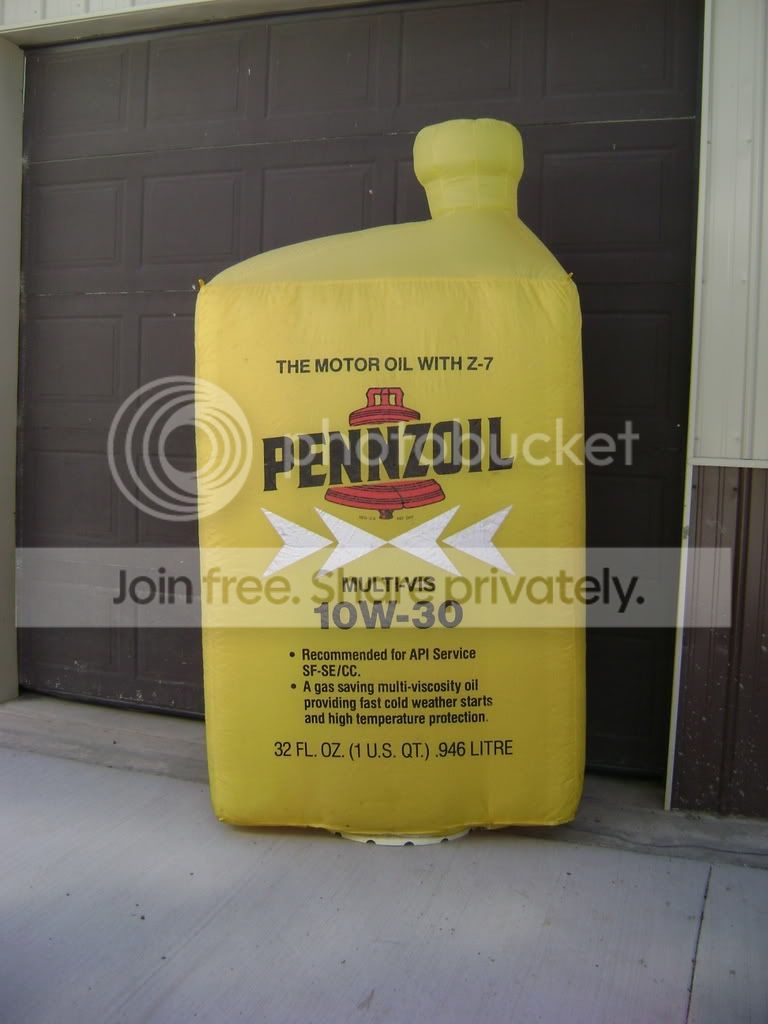
TOp of that he used to fill it with this

PENZOIL001.jpg


:D :D :p

You are correct in saying I spun my #3 rod bearing. You are also correct in saying I drove the $hit out of the truck. I must have had over 200 passes at the track if not close to 300.

The fact is our trucks left stock with the stock ECM will go over 100K miles. Clint (Flchub) drove the $hit out of his stock Srt10 and made it past 100K miles without any issues.

The problems start with modding the truck. Firstly let's start with the basics like NA trucks are less likely to have oiling issues compared to FI trucks.

High RPM's (over 5500) lead to oil starvation with factory oil pump under certain situations. Engine knock can also cause spun rod bearings due to oil starvation under stress of engine knock. Engine knock can result from too much timing, bad AF ratio or poor fuel and or octane rating of fuel. If you have an 04 truck you don't have a knock sensor so it is extremely important to have a safe tune on 04's. The 05 and 06 trucks have knock sensors that retard the timing 2 degrees when the knock sensor reaches 1.2 volts.

When tuning the trucks I recommend that the knock sensor should not read any more than 0.5 volts to be safe. I tuned my truck to just under 1.2 volts throughout the rpm range for the most power right before the rod spun.

The A/F ratio on NA should be around 10.5 - 11.5 under W.O.T. to be safe. The engine shift points and redline should be set to 5500 rpm max. If you are running NOS or Meth injection you will need to tune to and even richer AF ratio.

The crankshaft also is extremely long and is prone to bending under high rpm's which in turn may also cause oil starvation due to flex. It is important to have a good dampner to minimize the engine vibration.

Our pistons have an extremely low tolerance to engine knock as well due to the ring lands being so close to the dome of the piston. Any knock may result in cracking the first ring land causing big problems. Our rods are not that strong either and I don't recommend having any more than 650 RWHP on our stock internals due to the rod and piston issues.

Also I remember someone that added an oil additive that caused his engine to blow and I forget what additive it was and who it was. Does anyone remember this?
 
How many have had a failure with the stock engine? How many have had failures on engines with quality aftermarket internals (pistons, rods, bearings) with a power adder? I haven't read any, but could be wrong. The SRT guys thrash any of the SRT engines prior to production to ensure they will withstand the abuse of the general public and still can be warrantied. The Viper engine is not a new design. The same engine in our trucks was available the year prior in the Viper car. Remember that you are getting a race type engine in a street vehicle. Most race engines get torn down and checked after each race.

It is just like any engine build, once you change the stock design you need to start re-engineering for the performance mods you make. Any auto manufacturer is going to put just enough into materials to make the engine last through warranty and pass emissions.

The stock Viper pistons are adequate for the stock engine. Increase cylinder pressure through the use of a power adder you will be asking for trouble with the stock internals. If you go the geek route, you can start calculating the stress on parts and spec what you need or you can get some quality parts that will be stronger than the anticipated loads. There is no way I would add boost or nitrous to a stock engine. I think half the problems are from pressures and temperatures that exceed the design of the stock parts. Bearing clearances, ring end gaps, piston design, and piston to cylinder wall clearance all change when you start adding pressure.

As far as oiling goes...Every engine I have built, I spent considerable time in the block on oiling. Porting oil return galleys (remove casting flawing), replacing press-in plugs with NPT plugs, and updating stock pumps with a higher volume pump amongst other things. Also making sure the pan is of adequate size for the new pump (I have seen high volume pumps pull all the oil out of the pan at high RPM starving the pump) and the pickup is in the correct spot for the application. I do not know of a high volume pump for our engines. However, I do notice there are a lot of dry-sump conversions used for the racing Vipers. That is the route I would go. Far superior to our wet sump systems. I have not done much investigation to what it takes for the conversion (other than the standard pan, reservoir and pump).

I guarantee any failure does not happen overnight. If you are concerned, then start taking oil samples and sending them in for analysis. You should do this before you start modding to have a baseline. Oiling problems will start to show up with higher concentrations of alloys in your oil. Install a mechanical oil pressure gauge. You can see cavitation problems before too much damage is done. With proper design and blueprinting of an engine, you should be able to avoid most non-defect failures.

-Muzzy
 
Muzzy is 100% correct in my opinion...

One more thing...the Gen 4 main bearings are redesigned...and most current racing re-builds are using the Gen 4 bearings...with some additional machining for even more oiling. There must have been some reason for the redesign...
 
To me the problem isnt an "oiling" issue, More of a connecting rod issue. Think about it, if #3 had a serious oiling problem EVERY gen 3 motor would tear up that piston being that they are all the same design. If #3 was getting starved for oil wouldnt it just seize up in the block and not put a window in it? I think the issue is a all of these "little" problems added to make a big problem. Just my .02
 
GADodgetech said:
To me the problem isnt an "oiling" issue, More of a connecting rod issue. Think about it, if #3 had a serious oiling problem EVERY gen 3 motor would tear up that piston being that they are all the same design. If #3 was getting starved for oil wouldnt it just seize up in the block and not put a window in it? I think the issue is a all of these "little" problems added to make a big problem. Just my .02

The Gen3 Viper cars don't have the same issues we have. A lot of our problems can also be considered weight related. Also keep in mind that most of the #3 issues have been related to aftermarket power adders, tuning and or high rpm's.
 
i think the flow of oil is fine, i think it has alot to do with crankshaft deflection and the film of oil on what ever bearing not being sufficant enough to absorb the sock load, and the reason you see grove bearing and such it to provide improved film on the bearing. just a thought:marchmellow:
 
I spoke to Chuck Tator about this during the plan for my rebuild and he said to do nothing.
 
pokeytemplar said:
If it is ring lands then why #3? Did Dodge just get a huge batch of bad #3 pistons? If it is ring lands then there should be other cylinders windowing the block as well. I have never read of a different cylinder windowing the block.


my number two rod came through under the number one sleeve.
 
How many have used stud girdles? I know FSTJack has one but that engine isn't finished yet. Anyone else......
 
my wonderin is how many folks that lost an engine, lookin more oil prob. type faliure, still had the factory engine oil cooler lines???
oil pressure sensor is at the oil cooler out port, i believe, so if goin through the hoses causes a restriction, still shows good pressure & workin the crap out of the by pass valve & possibily causein cavatation also????

nope, oil pressure & temp. sensors at the engine inlet.
 
Last edited:
pokeytemplar said:
How many have used stud girdles? I know FSTJack has one but that engine isn't finished yet. Anyone else......

I'll be talking to Proline about whether they think I need one for my new build. I will be going with a mid plate regardless, but that is mainly for absorbing the launch on slicks.
 
Prof said:
Muzzy is 100% correct in my opinion...

One more thing...the Gen 4 main bearings are redesigned...and most current racing re-builds are using the Gen 4 bearings...with some additional machining for even more oiling. There must have been some reason for the redesign...

IMO, the redesign came and was needed when Chrysler started using Hemi components and upped the HP anty, among other things.
 

Latest posts

Support Us

Become A Supporting Member Today!

Click Here For Details

Back
Top