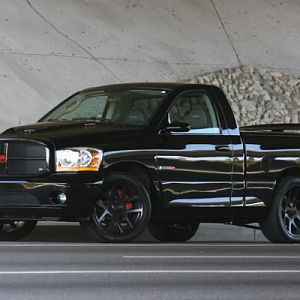
jsandlin said:
Man I really appreciate all yhe help I have received here from you guys. I now am nor sure if I should drop the tranny or try and turn the crank or call my insurance company (allstate). It just amazes me that I started the truck around lunch (after trying to determine where a squealing noise was coming from on my serpentine belt) with no problem to come out after work to a fukd truck. It was raining all during work but man it was like 12 - 16 ozs of water in the black intake tube
Riff62 said:
wow..15 pages, 145 posts, and 26 different theories, and we still dont know the exact cause..
Hoping for the best for you dude..
As someone stated, the most recent work done is where you should start..
The hydrolocked theory is interesting..never heard of it..
The bent electrode is not a good thing...
It sounds like you have a couple differnt issues..brokenbellhousinghydrolockedmotorbentelectrode syndrome is pretty difficult to diagnose..
Its easy to say pull the motor and ship it off, or rebuild it..good luck with whatever you decide to do, or not do..
Striker heads show: Combustion chamber range from 58cc to 82cc maximum.
That is just the heads, a bit more total CC's installed I would suppose.
Let's see then .....
1 fluid ounce = 29.6 cc = 6 teaspoons = 2 tablespoons = 1/8 cup
So even if we double the recipe (max) 82 cc's (164 cc) then we have:
164cc divided by 29.6 cc (1 fluid ounce) = 5.54 ounces or 33.24 teaspoons
full or 11.08 tablespoons full or
0.6931874661202645 cups 
So it looks like it would not take a lot of water to lock an engine up
From Wikipedia, the free encyclopedia
A shorthand notation for either hydraulic lock or hydrostatic lock is an abnormal condition of an internal combustion engine in which an incompressible liquid, commonly water, has been introduced into one or more cylinders, causing immobilization or damage. Hydrolock can occur because an internal combustion engine must compress a volume of gas in order to operate, while most common liquids that could enter an internal combustion engine do not compress. If liquid is introduced at a volume greater than the volume of the combustion chamber at its minimum (top of the piston's stroke), the piston cannot complete its travel. Either the engine must stop rotating or a mechanical failure will occur.
Hydrolock is relatively common when driving through floods, either where the water is above the level of the air intake or the vehicle's speed is excessive, creating a tall bow wave. A vehicle fitted with a Cold air intake mounted low on the vehicle will be especially vulnerable to hydrolocking when being driven through standing water or heavy precipitation.
Another cause can include a head gasket failure, which may allow the radiator coolant to leak into the combustion chamber.
Fuel entering one or more cylinders in liquid form due to carburetor flooding or other abnormal operating conditions can cause an engine to hydrolock, although this is relatively rare.
Small boats with outboard engines and PWCs tend to ingest water simply because they run in and around it. During a rollover or when a wave washes over the craft its engine can hydrolock, though severe damage is rare due to the special air intakes and low inertia of small marine engines